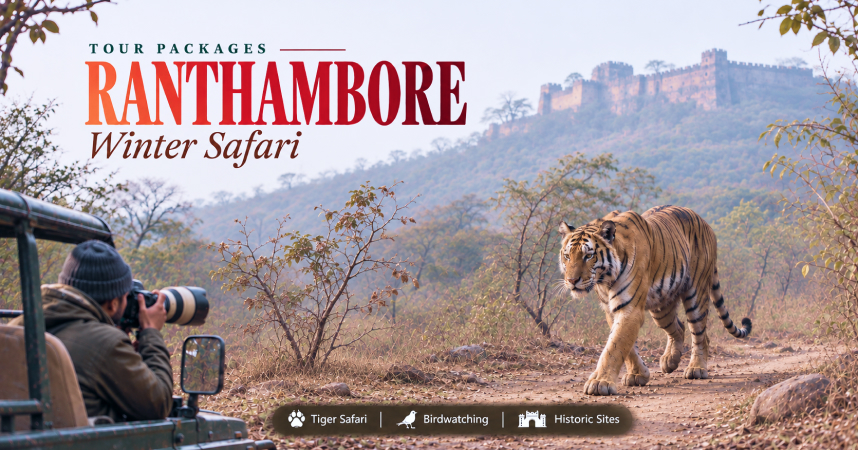
Winter is a popular time to visit wildlife destinations in India. From November to February, cooler weather makes outdoor activities more comfortable. One well-known destination is Ranthambore National Park in Rajasthan. It is famous for its Bengal tigers, different wildlife species, forest areas, and historical sites. The park attracts wildlife photographers, birdwatchers, and nature lovers. Visitors can explore its natural surroundings and learn about the animals that live there. Travellers planning a winter holiday can choose Ranthambore tour packages to organise their safari, hotel stay, and local travel.
Why Visit Ranthambore in Winter?
The time between November and February is ideal for visiting Ranthambore since the temperature can be relatively cooler compared to summer. The climatic conditions during the daytime can be nice for outdoor activities. However, mornings are quite cold, mainly in December & January. One needs to pack heavy jackets, caps, & gloves during this time, especially when one will travel in an open gypsy for safaris.
Winter brings some changes to the forest in Ranthambore. As the dry season progresses, the vegetation may become thinner in some areas, especially towards summer. This may make it easier to spot animals in certain parts of the park. However, the chances of spotting animals depend on their movements, weather, and the condition of the forest.
The other seasonal aspect is that of migratory birds. During the winter season, many bird species migrate to the area from different regions of the world. This is an advantage for people who would like to observe various bird species in their natural environment. There are also many wetlands & lakes in the park, which make the perfect habitat for various bird species.
The cool climate also allows tourists to plan a trip to other areas in Sawai Madhopur. They can sightsee without experiencing the warm climate of the summer season. It is important to check the weather forecast before embarking on the trip.
Wildlife You Can Spot in Ranthambore
Bengal tigers are the most famous animals in Ranthambore National Park. They are the main reason many visitors choose this destination for a wildlife safari. Tigers are usually found in areas that provide food, water, & shelter. Visitors may see them resting, walking through the forest, or moving near water bodies. However, sightings are not guaranteed because these animals move freely in their natural habitat.
Leopards are another important predator in the park. They are smaller than tigers and have strong climbing abilities. They usually prefer rocky hills, caves, & areas with thick vegetation. Their ability to remain hidden makes them difficult to observe during safaris.
Sloth bears are also found in Ranthambore. They mainly feed on termites, ants, fruits, and other natural food sources. Their long claws help them break into termite mounds while searching for food. These animals are generally found in forest areas where they can find enough food & shelter.
The park also has several herbivorous animals. Sambar deer are among the largest deer species found here. Spotted deer, nilgai, and wild boars are other animals that visitors may encounter. These species feed on plants, grass, & other natural food. They also form an important part of the food chain by providing prey for larger predators.
Crocodiles are commonly associated with the park’s lakes and water bodies. They can often be seen resting near the banks or staying partly underwater. They are important predators in the aquatic food chain.
Birdlife adds to the wildlife variety of the park. Visitors may spot peacocks, eagles, owls, kingfishers, & different water birds. Other species can be seen sitting on tree branches or flying over open forest areas. This variety makes Ranthambore a suitable destination for people interested in bird observation and wildlife photography.
Safari Experience and Ranthambore Fort
Taking a wildlife safari is the top activity at Ranthambore National Park. Tourists can select between two official vehicle options: an open gypsy for small groups, or a larger canter bus for bigger groups. Both vehicles travel only on paths approved by the forest department.
Safaris run in two daily slots, once in the morning & once in the afternoon. Because start times and trip lengths change with the seasons & sunlight, you should check the official timetable before traveling. The park is divided into multiple safari zones. Each zone has different landscapes, including open grasslands, rocky hills, dense trees, and water bodies. During the booking process, visitors may be able to select their preferred safari zone, depending on availability and booking rules. However, selecting a particular zone does not guarantee a tiger sighting.
During the ride, wildlife photography & birdwatching are very popular. Bring binoculars and a camera with a good zoom lens to see distant animals clearly. Always follow the rules shared by your driver & guide. You must not feed animals, make noise, drop litter, use camera flashes near wildlife, or tell the driver to go off-road.
Beyond the jungle, you can visit the historic Ranthambore Fort. Built on a high hill, this stronghold of the Chauhan rulers held great military value during past battles & changed hands among several kingdoms. Today, it is part of the UNESCO Hill Forts of Rajasthan. Inside, you can see old gates, temples, and ancient buildings showing various historical styles. Always verify current entry timings & rules before your visit.
Safari Booking Tips and Travel Planning
You must book your safari permits before arriving at Ranthambore National Park. Because daily vehicle entries are strictly limited, tickets sell out fast during peak times like December, January, Christmas, & New Year. Always reserve early & enter your exact travel date, group size, and ID details, as these must match your original ID at the entry gate. Read the payment, cancellation, & refund rules carefully before paying.
Next, arrange your stay in Sawai Madhopur or near the park. Compare hotels and resorts based on room rates, meals, facilities, local transport, & distance from the safari boarding point. Sawai Madhopur is the closest town and connects well to major Indian cities by road & train. If traveling by train, verify ticket availability & arrival times before booking your hotel, then arrange local transport to your stay.
For hassle-free planning, book one of the Ranthambore tour packages. Depending on the agent, these bundles may cover hotels, meals, local transfers, sightseeing, and safaris. Since inclusions vary, confirm whether park entry fees, vehicle costs, & permits are part of the final price.
Pack smartly for the weather. Bring warm layers for cold morning rides, light cotton clothes for warm afternoons, and comfortable walking shoes. Also carry your original ID, medicines, sunscreen, toiletries, and camera gear, while leaving banned items outside the forest. Finally, double-check all bookings and keep your permits & IDs handy to ensure smooth entry, avoid extra costs, and enjoy a well-organized holiday.
Winter Safari in India: Explore Ranthambore National Park