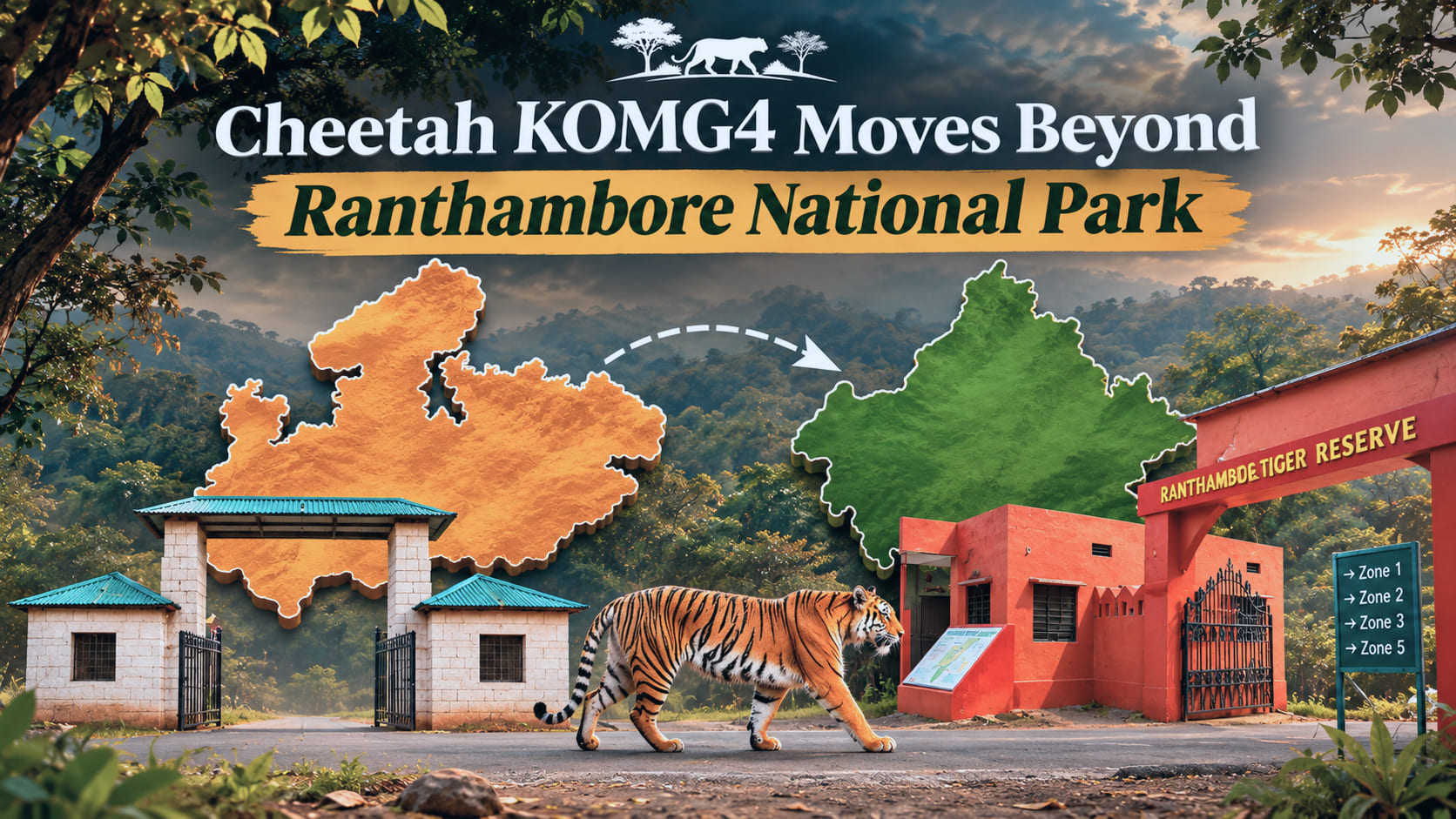
A cheetah by the name of KOMG4 from Madhya Pradesh moved into Rajasthan on 10th November after crossing the Chambal River near Gota Ghat. KOMG4 has moved through the forest cover and has come to the area of Ranthambore National Park before heading further on to Karauli District. The movement of the cheetah was interesting since the area surrounding the place was well known for tigers and other wildlife. KOMG4 was originally a resident of the Kuno National Park in Madhya Pradesh. This movement has helped in gathering information regarding the behavior of the animal beyond the place where it was originally released. The forest authorities from both states are monitoring the animal’s whereabouts.
Ranthambore National Park And Cheetah Movement
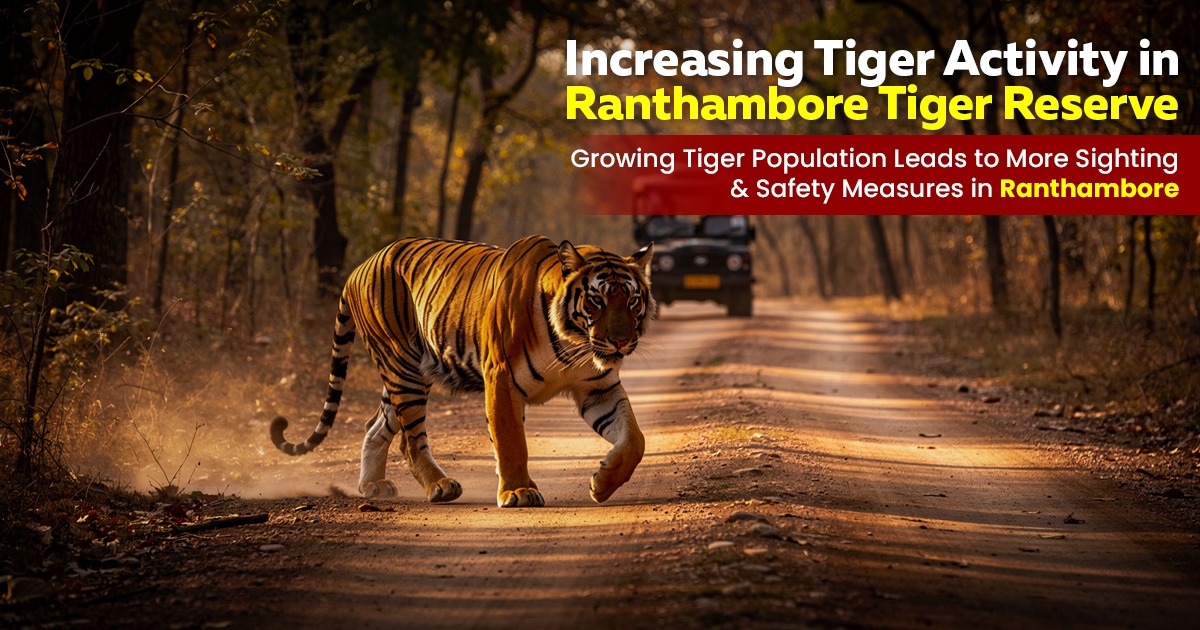
Ranthambore National Park is situated in the Sawai Madhopur district of Rajasthan state. It is one of the famous tiger reserves of India that offers a natural habitat to the Bengal tigers. It is home to other wildlife animals too, such as leopards, sloth bears, deer, crocodiles, and various species of birds.
The movement of KOMG4 within the bigger Ranthambore area has been of interest due to the fact that there are other large predators in the same area. However, the cheetah and tiger are physically distinct from each other, as well as in their techniques of hunting. Cheetahs have a slender body along with long legs that enable them to run very fast in open spaces. Tigers are bigger creatures and rely on vegetation for hunting.
According to Manas Singh, Divisional Forest Officer (DFO) of Ranthambore, KOMG4 has crossed the boundary of Ranthambore and moved towards Karauli district. This statement confirms that the animal has moved beyond the immediate park area. Its presence also draws attention to the forest regions surrounding protected areas, which form an important part of Rajasthan’s wider wildlife habitat.
How KOMG4 Reached Ranthambore Area
The initial home for the KOMG4 was in the Kuno National Park region of Madhya Pradesh. While on its way to Rajasthan, the cheetah made it to the Chambal River that forms a border between parts of Madhya Pradesh and Rajasthan. On November 10, this cheetah crossed the river at Gota Ghat.
As per the forest department data mentioned on the internet, the cheetah took advantage of the shallow and rocky part of the river to reach the other side in Rajasthan. Thus, the wild animal entered the adjacent state naturally. After crossing the river, KOMG4 arrived at the Kanararda area in the Maharajpura Naka region of the Karanpur forest range.
From there, the cheetah moved further to the Ranthambore area. The cheetah even crossed the Ranthambore area and moved toward the Karauli district. This trail is important since it passes through various terrains like river banks, rocky areas, and forests. By recording all these places, it may help scientists identify the trails followed by the cheetah during its movement.
Ranthambore Safari And Wildlife Safety
Ranthambore safari is a major attraction for wildlife tourists visiting Rajasthan. Visitors can explore authorised zones of Ranthambore National Park through organised gypsy and canter safaris. These visits provide opportunities to observe Bengal tigers, leopards, deer, crocodiles and birds. Safari activities also allow visitors to learn about the natural environment and wildlife found in the region.
The Forest Department regulates safari activities to protect both visitors and animals. Tourists must use authorised vehicles, follow approved routes and listen to their guides and drivers. Getting out of safari vehicles without permission, making loud noises or trying to attract animals can create dangerous situations. Visitors must also avoid feeding wildlife or moving too close to animals for photographs.
Another important part of wildlife safety is the proper handling of situations involving injured, stressed, or potentially dangerous animals. While there can be other factors also, as an online report mentions a recent incident in Karauli in which a tracking team was assaulted. Also, there can be the possibility of tranquilising cheetahs in certain situations.
Tranquilising means giving an animal medicine to reduce its activity or make it calm. Depending on the medicine and its dose, the animal may also become deeply sedated or unconscious. Wildlife professionals may use this procedure during medical treatment or when handling an animal becomes necessary for safety reasons. It requires trained experts, suitable equipment, and proper medical supervision. The animal’s condition must also be checked during and after the procedure.
People living near forest areas should avoid trying to approach or follow wild animals. They should inform forest officials if they notice an animal near their homes or villages. Such reporting allows trained teams to assess the situation without unnecessary disturbance.
Forest Teams Monitoring Cheetah KOMG4
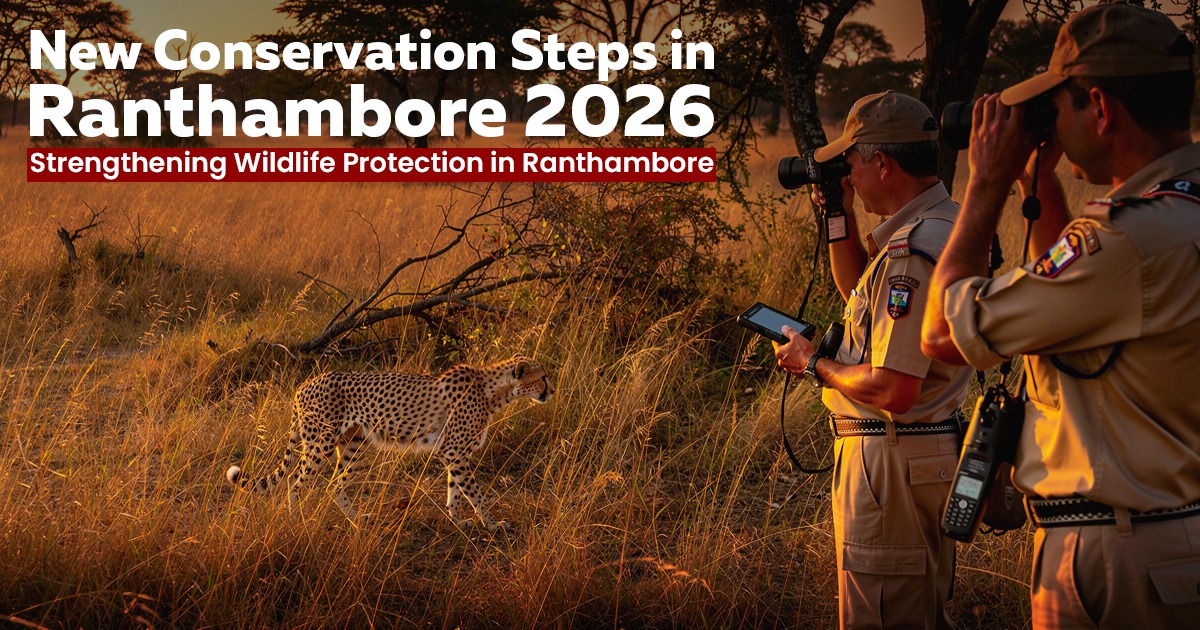
The Rajasthan & Madhya Pradesh forest departments have been monitoring the cheetah called KOMG4 very closely, taking into account its position, analyzing its health, & tracking its movements for the day. This allows officials to be aware of its activities & notice any potential problems early. Such cooperation is essential since the cheetah has moved away from its habitat in Madhya Pradesh. The officials in Kuno know its history, while those in Rajasthan monitor it within their state. Sharing updates will help both sides keep their records straight.
In addition to tracking the cheetah’s movements, its path to roads, farms, villages, & even grazing zones of other animals is tracked as well. This helps in identifying any possible threats that might arise for both the animal & the villagers around. In case the cheetah moves closer to the villages, appropriate safety measures can be arranged.
The journey of KOMG4 is part of India’s cheetah reintroduction project, also known as Project Cheetah. Cheetahs have been extinct in India since 1952. This project aims to restore cheetahs in India with those imported from other countries.
The project depends on monitoring the physical well-being, survival, & adaptation of the cheetah to the Indian climate & environment. Scientists evaluate the reaction of the animal to their new environment. Information obtained from each individual cheetah tells scientists how successful the project is.
When KOMG4 leaves his habitat, scientists obtain information about the behavior of the cheetahs. This allows scientists to monitor travel distances & preferred areas. It will aid in developing future conservation policies.
Precise tracking of cheetahs can help to identify important movement routes between the states. This can help in planning land conservation, reducing conflicts between humans & animals, & promoting cooperation between the forest officials. In essence, KOMG4’s journey from Madhya Pradesh to Rajasthan is very crucial for India’s cheetah project.