Ranthambore National Park is one of the most popular wildlife parks in India. It is in the Sawai Madhopur district of Rajasthan and is famous for its large tiger population. Many tourists visit because the chances of spotting a tiger in its natural habitat are high. The park includes dry forests, lakes, grasslands, rocky hills, and ancient ruins, which attract both Indian and foreign visitors.
Every year, many tourists make their Ranthambore safari booking in advance. Safaris run in gypsies and canters with trained drivers and guides. The booking system controls vehicle entry, protects animals, and ensures visitor safety.
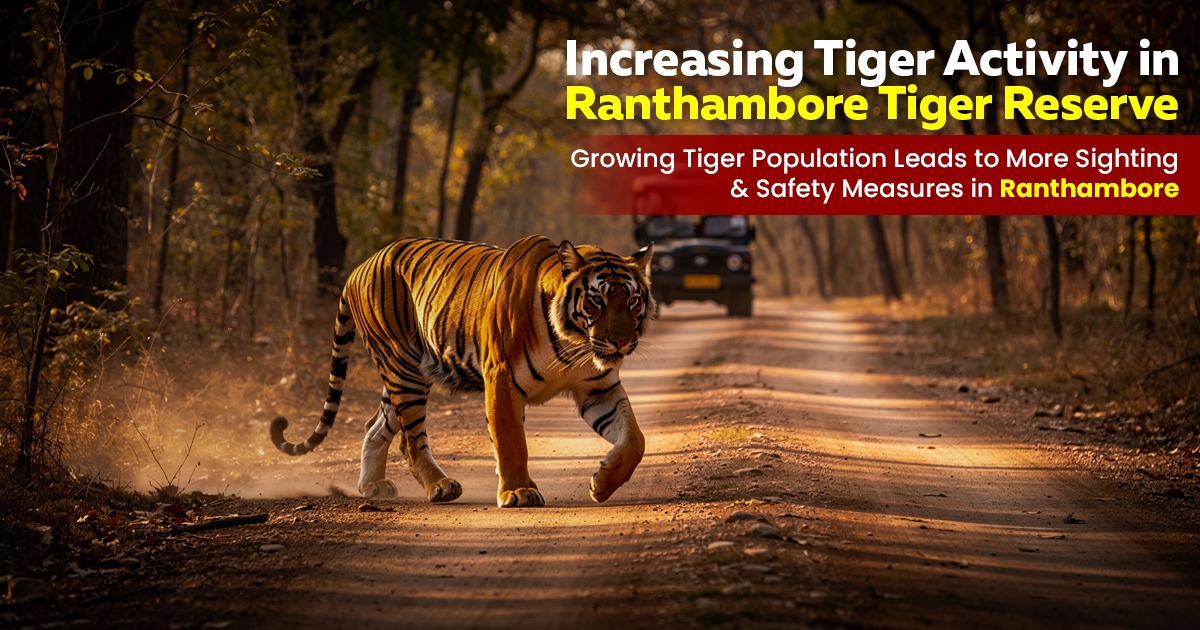
Recently, tiger numbers have grown. Tigers need larger territories, so sightings near roads, including the route to Trinetra Ganesh Temple, have increased, raising both excitement and safety concerns.
Rising Tiger Numbers In Ranthambore
Ranthambore National Park spreads across more than 1,300 square kilometers of protected forest land. In the last few years, the number of tigers in this park has increased in a steady manner. Recent data shows that the tiger count is now around 80. This growth has happened because of long-term and strict wildlife protection efforts.
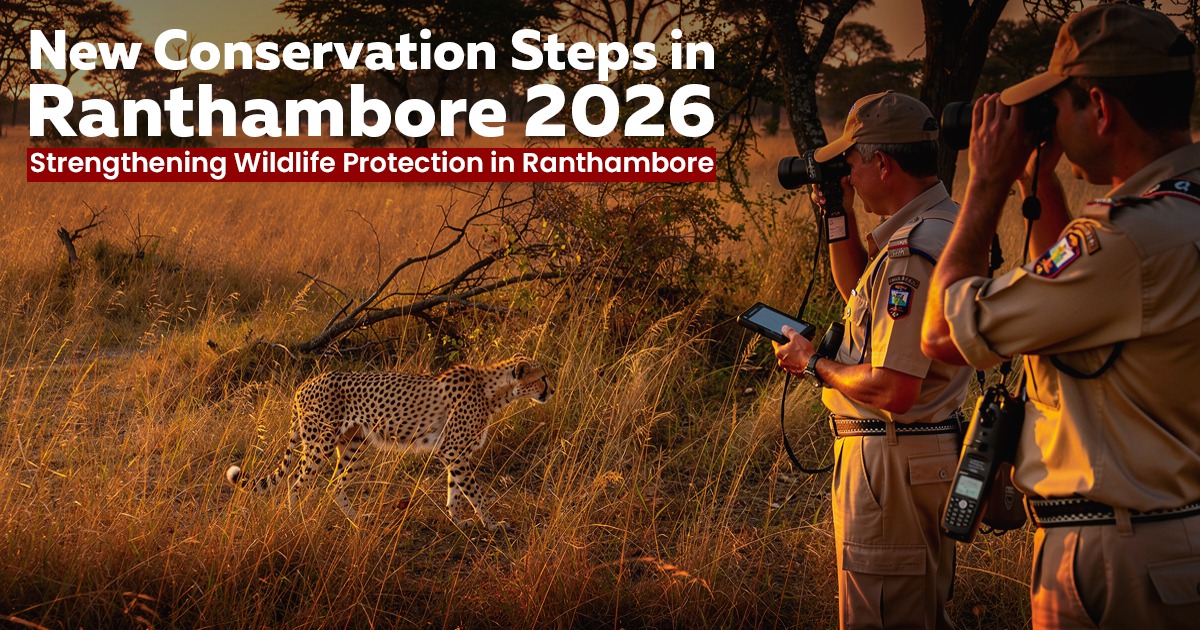
The forest department has worked hard to stop poaching. Forest guards patrol different zones of the park every day and night. They use camera traps and modern tracking technology to watch tiger movement. These actions have helped reduce illegal hunting. The park also has many prey animals like deer and wild boar, which provide enough food for tigers. When food and safe habitat are available, tigers can survive & reproduce well.
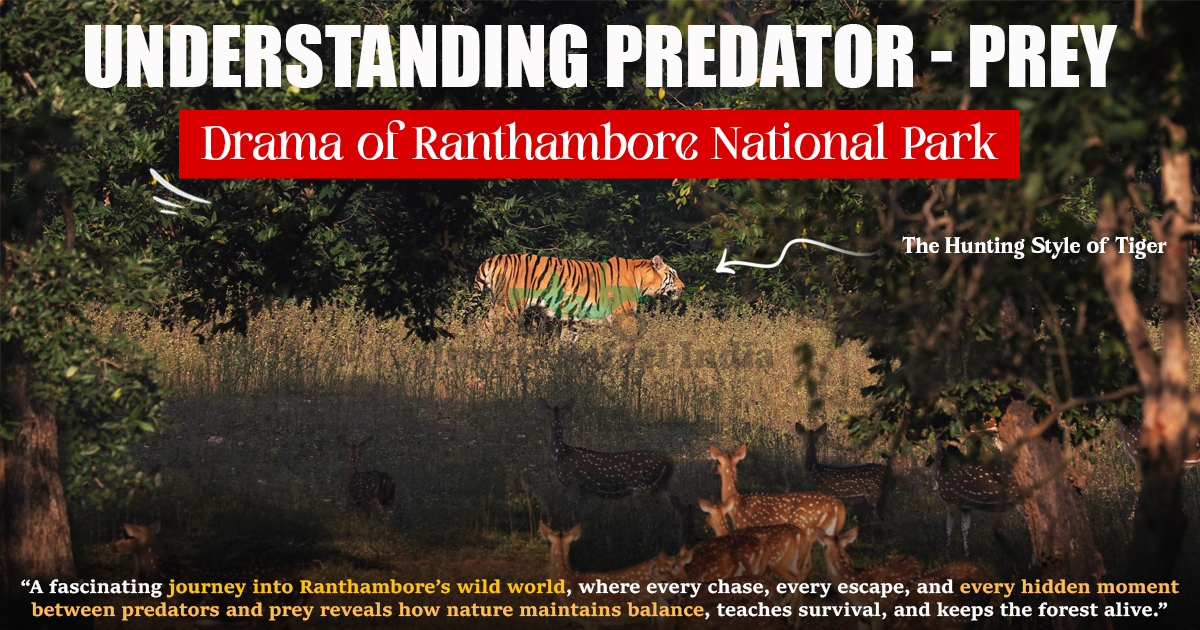
The tiger is India’s national animal, so this increase is an important success for the country. Tigers also help maintain forest balance by controlling herbivore numbers. However, as tiger numbers grow, they need more space. Young male tigers leave their mother’s area and move near villages and roads, increasing human interaction.
The Impact Of Tigers On Trinetra Ganesh Temple Road
The Trinetra Ganesh Temple is a well-known religious place located inside the forest area of Ranthambore National Park. Many devotees from Rajasthan and other states visit this temple for worship. The road to the temple passes through forest land, which is also a tiger habitat. Because the number of tigers has increased, sightings near this road have become more common.
Young tigers are sometimes seen walking across the road or resting near it. Normally, tigers avoid busy human areas. However, when their territories overlap or when they are moving to new areas, they may cross roads. When a tiger is seen near the temple road, forest officials immediately stop all vehicles. This is done to protect both the people & the tiger.
There have been several occasions when traffic was stopped for long periods because a tiger was sitting near the road or moving slowly in the area. During such times, vehicles must wait until the tiger leaves safely. People visiting the temple for darshan sometimes face delays. Some visitors feel nervous while waiting. Others feel excited because they can see a tiger outside a safari zone. Even though waiting can be uncomfortable, safety is more important. Stopping vehicles prevents accidents and reduces stress for the animal.
The Changing Territory Of Tigers In The Area
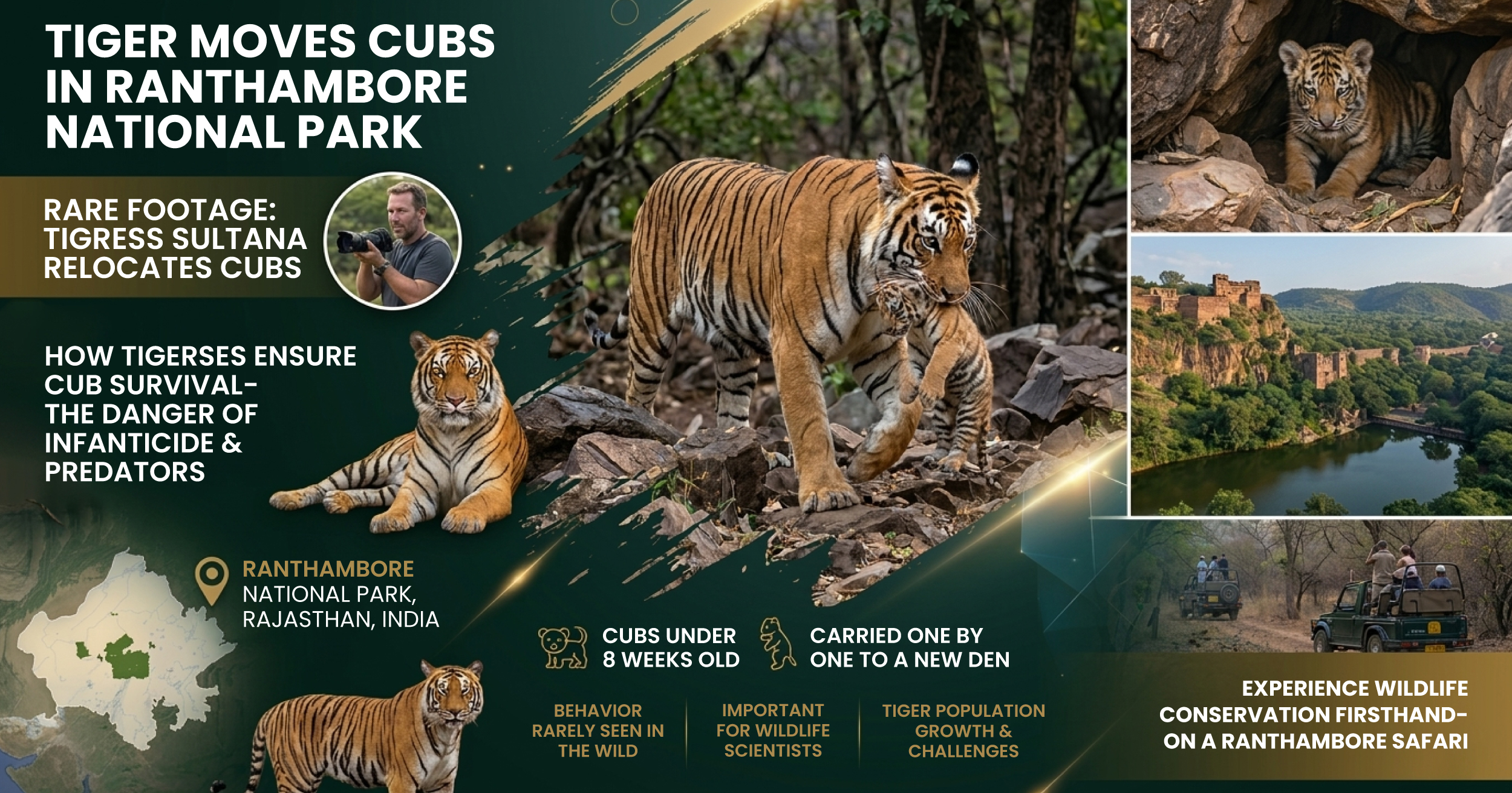
In earlier years, the temple road area was mainly controlled by a female tiger known as T-107, also called Sultana. She was regularly seen in this part of the forest. Visitors who made their Ranthambore safari booking often heard guides talk about her sightings. Female tigers usually stay in one fixed area for many years.
Recently, a male tiger known as T-2511 has started appearing more frequently in the same area. Male tigers require larger territories compared to females. They also try to control areas where female tigers are present. Because of this, the movement pattern in this zone has changed.
Male tigers regularly patrol and mark their territory. While doing this, they may use open forest paths & sometimes roads. One major incident happened when T-2511 stayed near the Trinetra Ganesh Temple road for more than two hours. During that time, traffic was fully stopped. Vehicles formed long lines on both sides of the road. Temple visitors had to wait until forest officials confirmed that the tiger had returned to deeper forest areas.
This situation shows that tiger territories are not permanent. As tiger numbers increase, territory boundaries shift. This natural process sometimes increases contact with human activities.
Forest Department’s Efforts For Safety
The forest department plays a very important role in managing these situations. Their main goal is to protect tigers and also keep people safe. Forest guards regularly patrol areas near roads, safari routes, and sensitive zones. They use vehicles and monitoring systems to track tiger movement.
Whenever a tiger is seen near the temple road, traffic is stopped immediately. Vehicles are kept at a safe distance. Drivers & visitors are given clear instructions. People are told not to get out of their vehicles. They are also told not to make loud noises or attempt risky photography. These rules are strictly followed.
Information about tiger movement is shared with safari guides. Visitors who enter the park after making their Ranthambore safari booking are guided by trained drivers and naturalists. These guides explain safety rules clearly. This reduces panic & confusion.
The forest department also works with nearby villages. Awareness programs are organized to explain tiger behavior. Villagers are advised on how to protect livestock and how to report tiger sightings quickly. Rapid response teams are sent when needed. These steps help reduce conflict between humans and tigers.
Visitors’ Experience & Concerns
For many tourists, seeing a tiger in the wild is the main purpose of visiting Ranthambore National Park. A tiger sighting makes their safari experience special. However, when a tiger blocks the temple road, the situation is different from a planned safari.
Some visitors feel happy when they see a tiger walking on the road. Others feel worried, especially families with children or elderly members. Long waiting times can cause frustration. Some visitors may have limited time and may worry about missing their temple visit or other travel plans.
Local residents also have concerns. As tiger numbers increase, there is a higher chance that tigers may move near villages. This creates fear about livestock safety and sometimes human safety. Although tiger attacks are rare, even one incident can create fear in the community.
The forest department understands these concerns. They continue to improve monitoring systems. They also make sure that visitors follow rules after making the Ranthambore safari booking & during the temple visits. Clear communication helps reduce fear and misunderstanding.