Ranthambore National Park, located in Rajasthan, is a well-known attraction in India to see Bengal tigers. Tourists from India and other countries come for the Ranthambore safari to watch tigers and other animals. This park is important for tiger safety and nature.
Nearby, the Sariska Tiger Reserve also helps protect tigers. Both parks provide tigers with safety, space, and food. But now, many tigers are missing from Ranthambore National Park and Sariska. This has made experts and locals very worried.
Monsoon rains have made it hard for forest guards to find or track tigers. If more tigers disappear, it can harm tourism, tiger safety, & nature. Fewer tiger sightings may also affect the Ranthambore safari experience.
Tigers Missing From The Parks
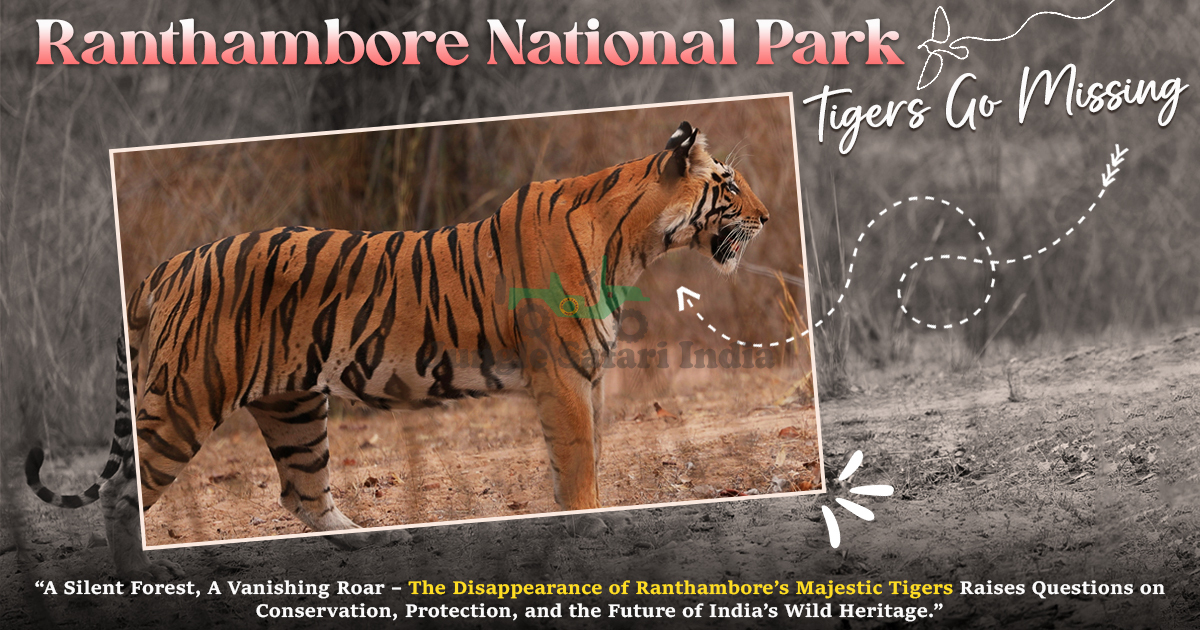
The problem of missing tigers is not small. Reports say that in the past year, a total of 25 tigers have disappeared from various reserves.. Out of these, Ranthambore National Park alone has reported 11 missing tigers and 2 from Sariska Tiger Reserve. The rest of the missing tigers are from other forest areas.
The forest department took steps to find them. They placed more camera traps in the forest to see if the tigers could be located. These cameras helped find 12 of the missing tigers. But the rest, 13 in total, are still missing. This means that nobody knows whether they are alive, dead, or have moved to another area. This situation is very serious because losing these tigers reduces the total population.
The absence of these tigers has created a gap in records. Each tiger in Ranthambore National Park and Sariska Tiger Reserve is given a unique code, and forest officials track them carefully. When such tigers go missing, it raises questions about the safety and effectiveness of monitoring systems. Ranthambore safari, which is famous worldwide, also depends on tiger sightings. Missing tigers means that tourists may see fewer animals, & this can affect the popularity of the safari.
Details Of Missing Tigers
The missing tigers are not just unknown animals. Each tiger is given a number or a code for identification. These numbers are used by forest officials and researchers to study their behavior and movement. The missing tigers in Ranthambore National Park are T-70, T-20, T-92, T-76, and T-71. These tigers were part of the official records and had been seen many times in the past.
In the Sariska Tiger Reserve, Tiger ST-13 and Tigress 2401, who lived in the Akbarpur range, are missing. Tiger ST-13 has been missing for almost three years. Even after many search operations, this tiger has not been found. The fact that it has been missing for so long shows the challenges in tracking tigers.
When individual tigers disappear, it is not just about losing an animal. Each tiger has its own role in the forest. Some are breeding tigers that help increase the population. Some are older tigers that hold territories. When they go missing, it disturbs the natural balance in Ranthambore National Park & Sariska. It also raises concern among tourists who come for the Ranthambore safari, expecting to see these specific famous tigers.
Problems Caused By Heavy Rains
The monsoon season is important for the forest because it brings water and helps plants grow. But for tiger conservation, it creates many difficulties. In Ranthambore National Park, heavy rains have caused flooding in many areas. Safari routes that are used by forest rangers and tourists often get closed. This makes it difficult for rangers to reach some parts of the park.
When the paths are flooded, patrolling becomes very slow. Rangers cannot move to many areas where tigers usually roam. This reduces the monitoring of tiger movements. Traditional tracking methods also fail during the monsoon. Normally, pugmarks or footprints are used to know where a tiger has walked. But in heavy rain, pugmarks disappear very quickly.
Camera traps, which are usually very helpful, also face problems in the rain. The visibility becomes low, and sometimes the equipment gets damaged. As a result, the forest department cannot get proper photographs or videos of the tigers. Because of this, the search operations for missing tigers have slowed down. This shows how weather conditions affect conservation work in Ranthambore National Park and Sariska.
For tourists, the monsoon also reduces Ranthambore safari options. Many routes are closed for safety reasons. This means fewer safaris are possible, and tourists may not see tigers as often.
What Officials Are Saying
Forest officers and wildlife specialists have shared some reasons why tigers are missing. One reason is movement. Sometimes, tigers leave their home area to look for food, a mate, or more space. Some tigers from Sariska or Ranthambore Park may have entered Madhya Pradesh, close to Kuno National Park. This type of movement is normal for tigers.
Another reason may be natural death. Many of the missing tigers were old. Tigers usually live for 15 to 18 years. Some of these tigers were near that age, and they may have died inside the forest. Because of the large forest area and heavy rains, their bodies may not have been found.
Officials also believe that tigers may be staying in caves or on higher ground during the rainy season, which makes it hard to find them.
A committee was made to study the missing tiger cases, but even after one year, no full report has been given, which is causing concern.
Current Situation
At present, search work is still happening in Ranthambore National Park and Sariska. Forest teams are using camera traps & checking animal movement, but the progress is slow. 13 tigers are still not found out of 25 missing.
A tiger named ST-13 of Sariska has been missing for more than three years. Even after a long time, there is no update. This shows that the tracking system is not working well in all cases. If tigers disappear and are not found, then the current tracking methods need improvement.
These missing tigers are a serious matter for tiger conservation in India. Both Ranthambore National Park and Sariska are well-known for their tigers. Many people travel for Ranthambore safaris from various parts of the world. If tigers are not found, it may reduce tourist interest.
This problem also shows that protecting tigers is not only about stopping hunting. It is also about using better tools and plans to follow tiger movements, especially during the monsoon season.
Even inside protected parks like Ranthambore National Park, tigers can go missing. The forest team needs stronger systems to make sure tigers are always safe & easy to track.