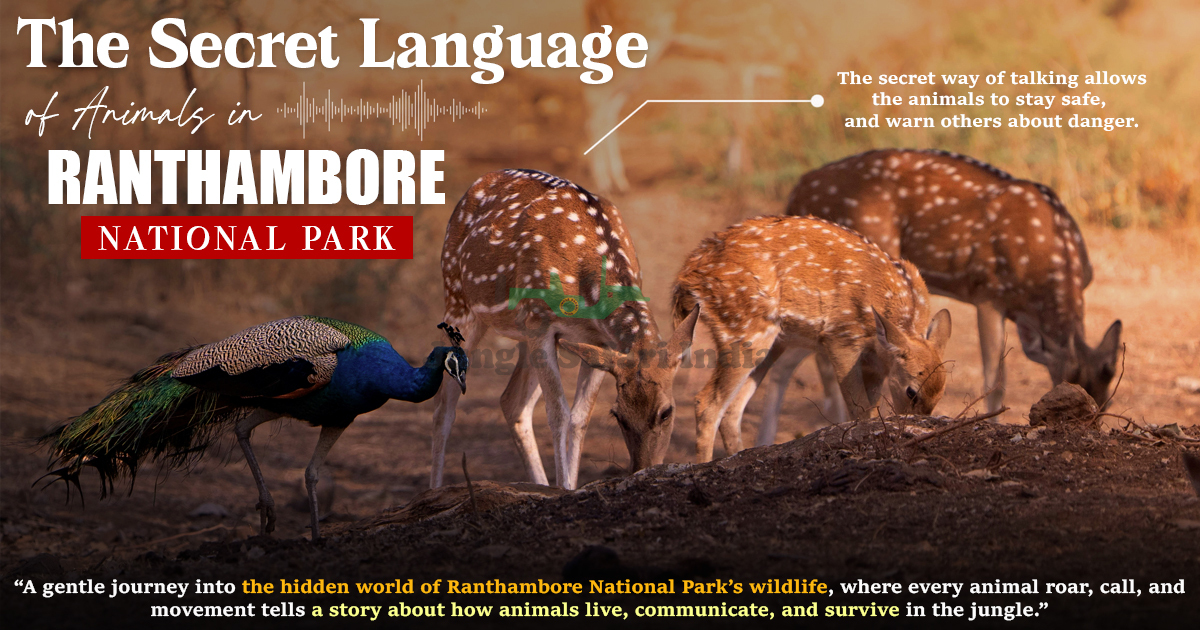
Ranthambore National Park is a wildlife spot in India which is famous among people for its thrilling safari rides. This park is known among people for its tigers, old fort, green forests, sparkling lakes, and different kinds of animals. But there is something special in this jungle that many people do not notice. The animals of this park talk to each other through different sounds. They don’t use words like humans, instead they talk with each other by making sounds, movements, calls, and signals.
The secret way of talking allows the animals to stay safe, find food, and warn others about danger. If you enjoy your Ranthambore safari in silence, then you can easily hear the sounds of the forest and realise it’s always speaking in its own way. Let’s know how you can decode the secret language of Ranthambore when you go for a safari.
Why Do Animals Need a Secret Language?
The Jungle is a natural home of animals, and they cannot send messages over phones. They also don’t have the ability to shout to each other to talk as humans do. So, the animals of Ranthambore National Park use a special language made up of their unique sounds, movements, smells, body actions and calls. Every animal of Ranthambore, including the tiger, deer, langur or even a tiny bird, uses some kind of signal to talk with each other.
These secret languages of animals help them to stay safe from predators, and through the language, they can also warn other animals about the danger. The animals also use this language to tell their group where food and water are, and it helps them to stay together while walking. They also communicate with the babies through their secretive language.
What Are Alarm Calls?
These are basically the warning sounds that animals make to warn each other about danger. It is like when a child shouts “Careful!” if a friend is about to fall. Animals of Ranthambore mostly give alarm calls when they see a tiger, leopard, wild dog or any kind of big predator.
The guides and drivers also know these sounds, and it gives excitement during the Ranthambore safari, as it gives a hope of sightings of tigers. If you see a spotted deer making a “krrr-krrr-krrr” sound, then it means that a tiger is nearby. The sound is sharp and repeated again and again.
Just like deer, langurs also make different sounds. They sit on the branches of trees, and because of the height, they can see the danger from far away. When they spot a tiger walking below, they make a loud “khuk! khuk! khuk!” sound. Their calls are very strong and can be heard from far away. Many safari guides in Ranthambore follow langur calls to track tigers.
Bird Signals: The Tiny Messengers of the Forest
Birds are small, but they are smart and fast. Birds of the Ranthambore act like tiny guards who tell others about danger.
Here are some important bird signals:
1. Drongo Alarm Call
Drongos are black birds with long tails. They make sharp, loud calls when they see a predator. They even follow tigers because they know other animals run when the tiger walks, which helps drongos catch insects that fly out.
2. Peafowl (Peacock) Calls
Peafowls make loud “kee-ow, kee-ow!” sounds when they sense danger. These calls can help animals like deer, wild boars and smaller birds to know about danger. Even the tourist on safari can listen and identify this sound to know where a big animal is. Peacocks even stay on trees at night and warn the whole jungle if something dangerous moves below.
3. Treepie Calls
Rufous Treepies are orange, black, and white birds. They keep chattering loudly when they follow a tiger or leopard. If you see a trrepie being very noisy around bushes, then your guide can identify its sounds and know that an animal is hiding there.
The Silent Signs – Another Secret Language
Not all the communication inside the Ranthambore National Park happens through sounds. The animals of this park also use some silent signals, and they use this as the most secretive language to speak with each other.
1. Tail Signals – Deer raise their white tails when they sense danger. This is a visual signal that says, “I saw something! Follow me and run!” Many guides and even true wildlife lovers know about these signals, and they use them to spot animals inside the park.
2. Body Movement – Langurs jump to higher branches when they spot a predator. On the other hand, if you see a wild boar standing still and freezing, then just know that a big animal is near it, like a leopard or tiger. These actions help others understand what is happening.
3. Scent Signals – Tigers use smell to communicate. They do it by spraying their urine on trees or by scratching on the bark of trees. They also rub their body on the ground to mark their territory. These scent marks tell other tigers about their territory, or to say that stay away from this area. Even tourists sometimes see these scratch marks on tree trunks during the safari.
How to Notice this Secret Language During Safari
When you go for a Ranthambore safari, you can try to stay silent during the ride and listen to the sounds of animals. Do take care to see if the deer are standing still or running towards a particular direction. Observe the sounds and movements of animals, if you wanna see a big animal during your thrilling safari ride.
Safari guides in Ranthambore are very good at reading animal signals. A guide can easily tell when a tiger is near your safari area or if it is walking, hunting, resting, or simply hiding in bushes. They do this by listening to the deer calls, langur sounds, bird warning or by watching the animal movements. This is why an experienced guide can give tourists an amazing Ranthambhore safari experience.
Every sound you hear inside the park is a message. The forests keep talking, and listening to them is the main work. You can simply close your eyes and listen to the sounds of the forest when you go for a ride inside the boundaries of the wild Ranthambore National Park.