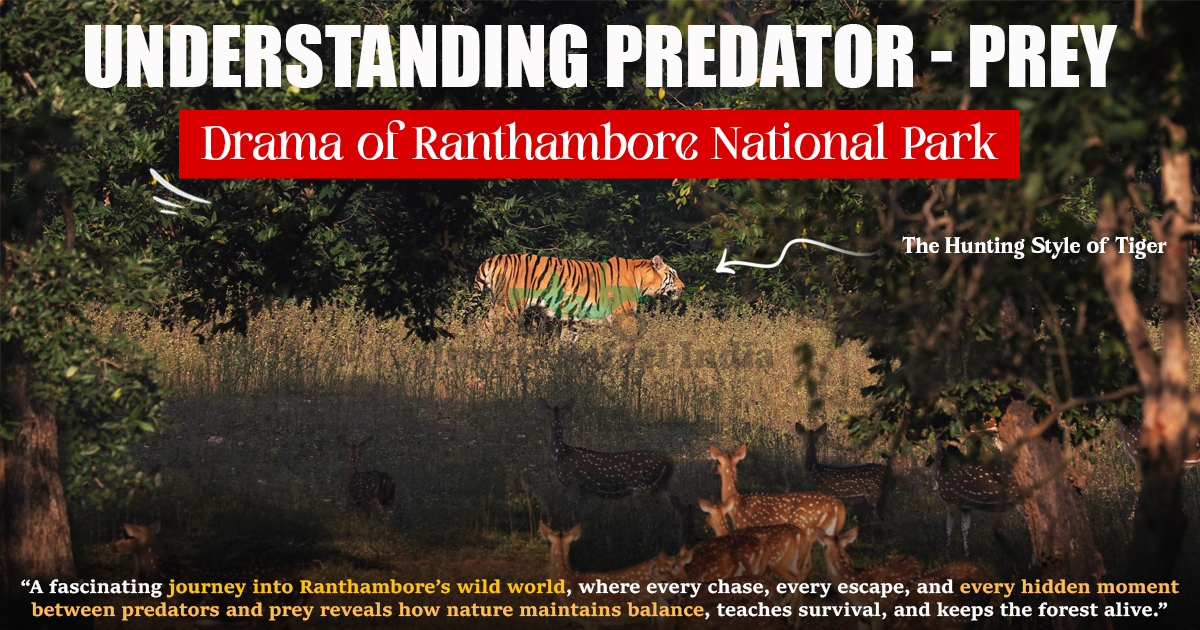
Ranthambore is one of those forests where every moment feels alive. You may be enjoying your Ranthambore safari inside the park, feeling the cool wind and clicking photos of deer… and suddenly the entire jungle becomes silent. The birds stop chirping. The monkeys freeze. The sambar deer lift their heads. And the guide whispers, “Tiger is near.” This predator – prey drama of Ranthambore attracts tourists from different places.
This shift in the air is the real magic of Ranthambore National Park. The predator – prey drama that goes on silently, every single day. Tigers hunt, animals react, and the entire ecosystem moves like a natural theatre. This blog will help you to understand how tigers plan their hunt and how other animals respond the moment a predator is around.
The Hunting Style of Tiger
1. They Hide at Start
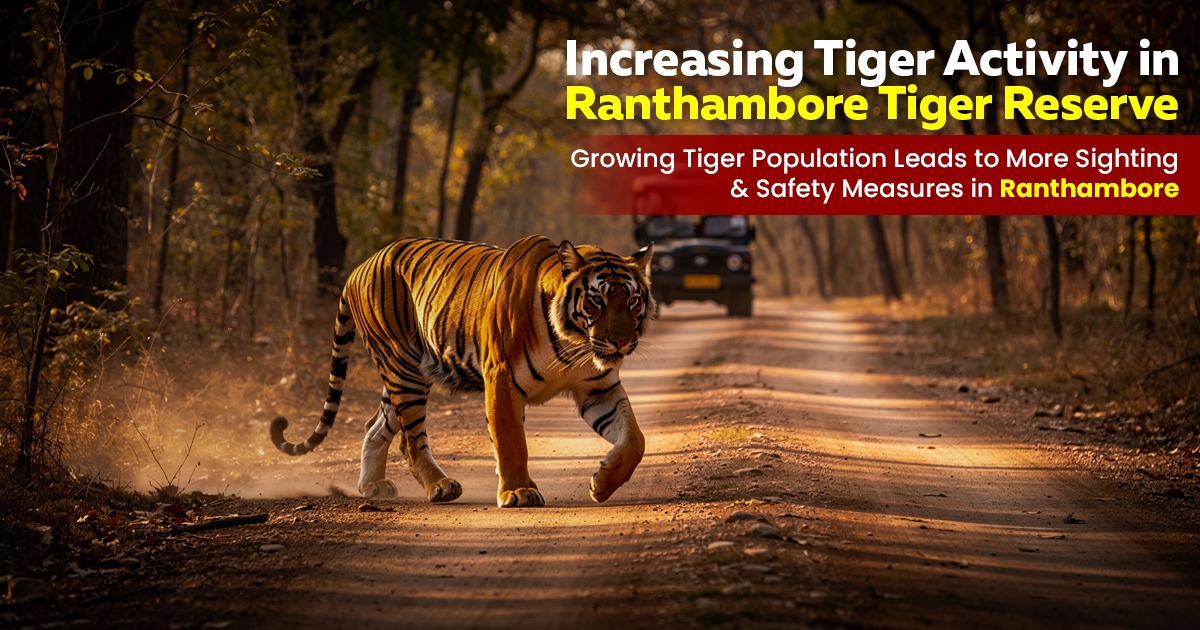
A tiger is not just strong, it is extremely intelligent animal. Ranthambore’s tigers don’t chase their prey from far away. Instead, they depend on stealth, patience, and timing. The tiger is a huge animal and even after that, they know how to disappear indie the park. The orange and black color of toger helps them to blend in the dry grass and dusty trials of Ranthambore National Park. A tiger will usually, stay low to the ground, choose paths with dense grass or they move only when the prey is looking away. Many tourists think a tiger is resting beside the road, but in reality, it is slowly planning its next move.
2. They Stalk With Patience
Tigers spend more time to plan than chasing the prey. They may stalk a herd of deer for 20 to 30 minutes before attacking. During this time, they carefully judge the deer. They see which deer is weak or distracted. They also see which direction the wind is blowing or how much noise their paws are making in that time. They also think about how close they can get without being noticed. Tigers are really intelligent animals and they stalk before hunting. Their paws are padded like soft cushions, so they walk without sound. Even dry leaves don’t make noise under their feet.
3. The Final Sprint
Tigers don’t run long distances. They make one short and powerful dash from a very close range which remains usually between 20 to 30 meters. This last movement is so fast that even trained guides sometimes miss it. Once the tiger gets close enough to prey, they attacks the prey from the side or behind, or tries to bring it down. Tigers usually aims at neck to suffocate the prey animal. The entire chase lasts only a few seconds. If the attack fails, the tiger does not run behind the prey for long. It stops, rests, and waits for another chance later.
How Prey Animals React Inside Ranthambore
Animals inside the forest are always alert. They cannot afford to relax too much because danger can come from anywhere. Each species has its own way of warning the jungle when a tiger is around.
1. Sambar Deer – The Loudest Alarm Call
Sambar deer are like Ranthambore’s security guards. When they sense a tiger – they stomp their feet, look in the direction of the predator, and give long, deep alarm calls. These calls can be heard up to a long distance. The moment a sambar calls, guides know that a tiger is active in that area. The alarm call of the Sambar are so accurate that even the forest department depends on them during patrolling.
2. Langurs – Watchman who looks from trees
The langurs of the wild Ranthambore National Park sit high on the trees of the park and they can easily spot the predators even from a large distance. They make sharp warning sounds when they see something unusual. Langurs also give signals of tiger being near. They do it by waving their tails, jumping from one branch to another and they try their best to alert other animals below them. They are especially helpful in giving signals near the water bodies and open areas where deer graze.
3. Spotted Deer – Always Nervous but Always Alert
Spotted deer (chital) are very sensitive animal. They are those animal species that even react to small things, like when bushes moves a little bit. The alarm calls of spotter deer are short and quick and they run in groups to confuse the tigers. But sometimes, the nervous nature of deer worlds against them as they panic very easily. The panic and their sudden behaviour easily makes them more predictable for the tiger.
4. Peacocks – The Surprise Protectors
Peacocks may look pretty, but they also give loud alarm calls when they feel danger around them. Their calls echo inside the Ranthambore National Park and it alerts small animals like hares and birds. Peacocks usually sit on higher spots, so when they spot a tiger or leopard early, their sharp calls help many animals stay alert and safe in time.
5. Birds – Warn animals from Sky
Small birds react instantly when they see movement on the ground. Their sudden flight or cluster movement often gives clues to guides about predator activity close by. These birds stay active all day, so even a small rustle or shadow can make them alert, helping the whole forest understand that something is happening nearby.
The Predator – Prey Drama Inside the Jungle
One of the most dramatic moments in Ranthambore National Park is when everything becomes silent. No bird calls. No rustling. Even insects stop making sound. This “silent zone” usually forms when a tiger is stalking, resting in the grass, drinking near the waterhole or moving on the trails. If you’re on a Ranthambore safari and feels that entire forest area is silent around you, then just know that a tiger is near. Mostly, the guides understand this situation and slow down the gypsy for getting chances of tiger sightings.
Tiger Hunt & Prey Drama
If you’re on a safari during hunting time, then you can notice a suddden shift inside the park. The deer start moving closer together, langurs climb to higher branches, birds fly in small flocks, the wind feels still, the tiger crouches in tall grass, and the Jugle almot becomes silent. During a safari, if you notice these things – then just know you’re about to watch a thrilling hunt inside the Ranthambore National Park. The tiger hunt is the most intense part of the predator – prey drama. The prey can sense something, but they don’t know exactly where the danger is.
Once the tiger brings down its prey, animals react in different way. The alarm calls stop, birds like vultures and eagles circle from above because they wait for him to leave something, smaller animals keep a safe distance from that area and you might even see a tiger dragging the kill to a safer place. Tigers usually pull the prey into bushes or near a waterbody. They eat quietly and may return to the kill multiple times. Other animals also wait nearby, but they never go too close until the tiger finishes.